

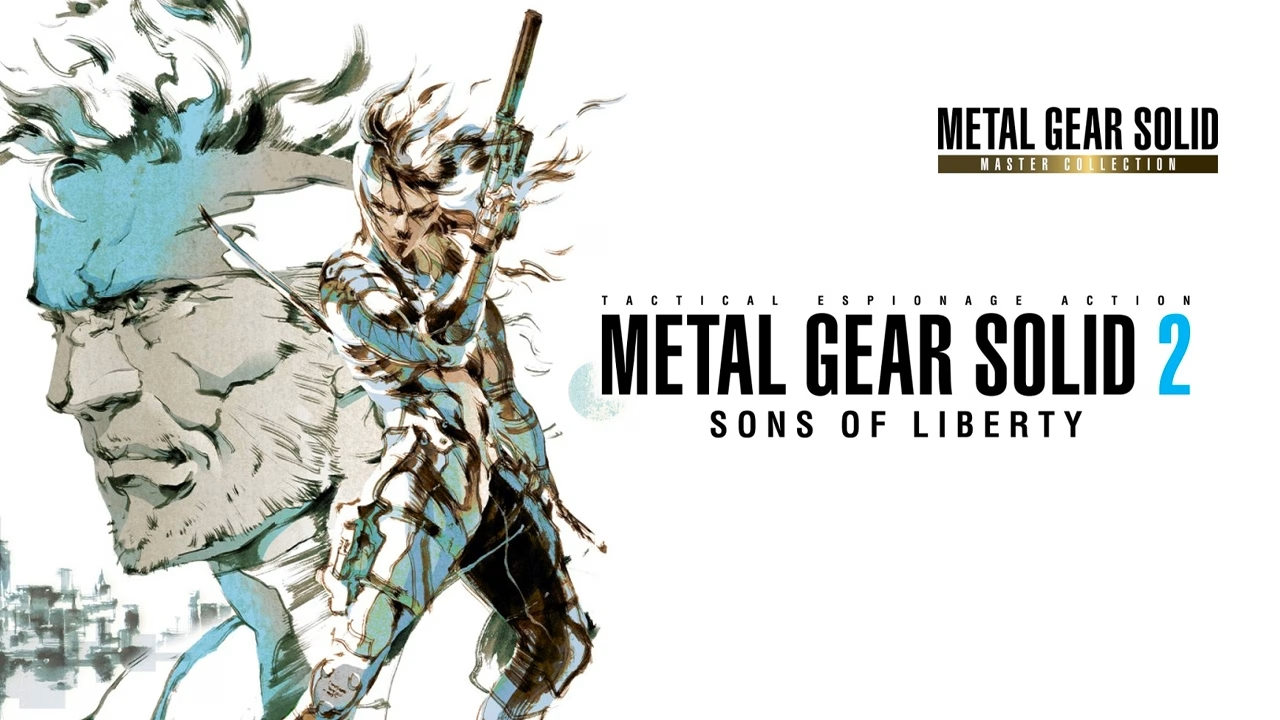
Twenty-five years ago, Hideo Kojima released a video game that challenged the very relationship between players, storytelling and the information they were given. On November 13, 2001, Metal Gear Solid 2: Sons of Liberty arrived on PlayStation 2 in North America, establishing itself as one of the most ambitious and controversial productions in gaming history. What initially appeared to be a spectacular continuation of Solid Snake's adventures gradually revealed itself as a disturbing exploration of information control, artificial intelligence and the illusion of personal freedom. Today, as algorithms increasingly shape what people see, believe and discuss, Kojima's masterpiece feels less like science fiction and more like a warning that went largely unheeded.
A sequel that deliberately broke its promises
Following the phenomenal success of the original Metal Gear Solid, expectations surrounding its sequel were enormous. Konami's promotional campaign placed Solid Snake at the center of the experience, while a playable demo included with Zone of the Enders showcased an impressive tanker infiltration sequence. The technical leap offered by PlayStation 2, combined with the promise of a new adventure starring one of gaming's most recognizable protagonists, generated extraordinary anticipation.
Yet Kojima had engineered a remarkable deception. After the opening mission involving Solid Snake, Otacon and the investigation of Metal Gear RAY, players found themselves controlling Raiden, an inexperienced operative dispatched to the Big Shell offshore facility two years later. Even promotional footage had concealed the switch by placing Snake in sequences originally featuring Raiden. The decision frustrated a significant portion of the audience, but its narrative purpose became increasingly apparent as the story unfolded.
Raiden's identity crisis reflected the player's own experience. Both entered the adventure with preconceived expectations, trusted instructions delivered by seemingly reliable authorities and gradually discovered that their understanding of events had been carefully constructed. By turning its marketing campaign into an extension of its storytelling, Metal Gear Solid 2 accomplished something few video games had attempted: it made the audience experience the very manipulation its narrative sought to expose.
The terrifying relevance of Kojima's digital dystopia
Beneath its elaborate espionage plot, Sons of Liberty examines the power of controlling information in a connected society. What begins as a hostage rescue operation involving the US president, the terrorist group Sons of Liberty and Solidus Snake eventually reveals a much larger experiment orchestrated by the Patriots. The objective extends beyond military dominance. It concerns the ability to influence human behavior by determining which information survives, which narratives circulate and how individuals interpret their reality.
The game's unforgettable final hours transform this concept into a deeply unsettling interactive experience. As the GW artificial intelligence system deteriorates, Raiden's commanding officer begins issuing increasingly irrational instructions, eventually addressing the player directly and demanding that the console be switched off. The boundaries separating the fictional mission, the game interface and the person holding the controller begin to collapse.
In 2026, these ideas resonate with remarkable intensity. Social networks have become powerful intermediaries between individuals and the world around them. False information can spread at extraordinary speed, influence political debates and damage public trust. Algorithmic recommendations can repeatedly expose users to familiar opinions while making alternative viewpoints less visible. Kojima's fictional Patriots may never have existed, but the struggle over who determines the information people consume has become one of the defining challenges of modern society.
Hideo Kojima believes his fictional world has become reality
The game's anniversary arrives shortly after Kojima revisited these concerns during a conversation published by Gizmodo Japan in October 2026. Speaking with Academy Award-winning filmmaker Alejandro González Iñárritu, director of DIGGER, the Japanese creator reflected on the parallels between his 2001 production and the contemporary digital landscape.
Kojima explained that the society imagined in Metal Gear Solid 2 has progressively materialized. He expressed particular concern about misinformation gaining momentum on social platforms and eventually influencing political developments and everyday life. Discussing Iñárritu's film, he identified a similar sense of helplessness: individuals appearing to act freely while remaining unaware of the forces shaping their decisions.
His concerns also extend to the growing integration of artificial intelligence into online platforms. Increasingly sophisticated personalization systems could create environments where users encounter information that reinforces their existing beliefs, reducing opportunities to discover unfamiliar ideas or engage with different perspectives. The central paradox is striking: humanity has access to an unprecedented volume of information, yet individual exposure to that information may become increasingly restricted.
Kojima had already addressed this issue in a December 2025 interview with WIRED Japan. He explained that Metal Gear Solid 2 was primarily an exploration of the future of digital society rather than a conventional story about machines taking control. Its dystopian vision was intended as a warning against a future he hoped humanity would avoid.
A technical revolution that transformed stealth gaming
The enduring relevance of Sons of Liberty should not overshadow its achievements as a video game. At the time of its release, the title represented a substantial evolution of the stealth genre. First-person aiming introduced greater precision, allowing players to target specific body parts, neutralize weapons and interact with environmental objects. Guards displayed more sophisticated behavior, coordinated their movements, investigated disturbances and responded dynamically to suspicious activity.
The game's environments also offered a remarkable degree of experimentation. Players could conceal unconscious enemies inside lockers, hang from railings, use environmental elements to distract or incapacitate guards and approach encounters through multiple strategies. These interconnected mechanics encouraged creativity rather than demanding a single predetermined solution.
Konami subsequently expanded the experience with Metal Gear Solid 2: Substance, released initially on Xbox in 2002 before reaching PlayStation 2 and PC in 2003. The enhanced edition introduced hundreds of VR and alternative missions, alongside five non-canonical Snake Tales scenarios that allowed players to return to Solid Snake. The PlayStation 2 edition even featured a skateboarding minigame. Meanwhile, The Document of Metal Gear Solid 2 offered an unusual interactive examination of the game's production, providing insight into the creative and technical ambition behind the project.
Twenty-five years later, the warning remains unanswered
Metal Gear Solid 2 occupies a singular position in gaming history because its artistic ambitions extended far beyond delivering an entertaining sequel. Kojima used the medium's interactive nature to examine how trust can be manufactured, how reality can be mediated through information and how easily individuals can mistake guidance for freedom.
Its enduring significance does not mean that Kojima predicted every development of the digital age. Rather, he recognized that the expansion of information technology would create new opportunities for influence, manipulation and control. Today, the combination of algorithmic recommendation systems, generative AI and increasingly personalized digital environments gives those questions renewed urgency.
Twenty-five years after its debut, Sons of Liberty remains a landmark of interactive entertainment. The controversy surrounding Raiden has become an essential part of its legacy, its mechanical innovations continue to deserve recognition, and its philosophical questions have only grown more relevant. The most unsettling achievement of Metal Gear Solid 2 is perhaps that its vision no longer feels particularly futuristic. What once appeared to be an extraordinary work of speculative fiction now confronts players with an uncomfortable reflection of the world they inhabit.



Comments
One quick step before publishing
Your comment is ready! Sign in with Google to publish it securely. What you wrote will stay right here.
Your comment will be sent for moderation after you sign in.