




The highly anticipated launch of Grand Theft Auto VI has sparked an unexpected controversy, despite the game achieving extraordinary commercial success and near-universal critical acclaim. Released on November 19, 2026, Rockstar Games' latest open-world blockbuster has already rewritten entertainment industry records, generating $3.79 billion in first-day retail sales and securing 32.5 million pre-release purchases. With a remarkable Metacritic score of 99 based on more than 150 professional reviews, the title appeared destined for an overwhelmingly positive reception. However, the situation has taken a dramatically different turn among players, with the game's user rating falling to just 4.9 out of 10 on November 20, raising concerns about a coordinated review-bombing campaign.
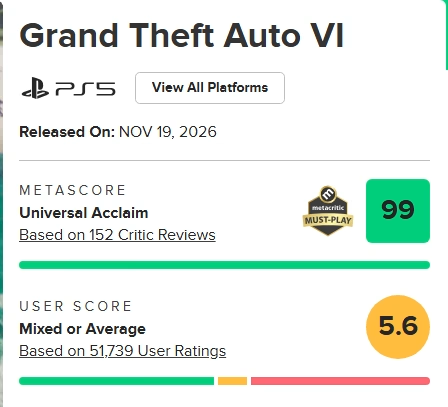 The controversy began shortly after Metacritic opened its user review section, triggering an influx of negative ratings. While some players have expressed genuine disappointment with certain aspects of the experience, numerous comments have focused on ideological accusations involving the game's narrative, characters and representation. Several reviewers have criticized what they describe as excessive political messaging or diversity-related themes, often without providing substantial arguments about the gameplay itself. This pattern has fueled suspicions that part of the negative reception is driven by opposition to the game's creative direction rather than an objective assessment of its quality. Nevertheless, the presence of review bombing does not automatically invalidate every unfavorable opinion, particularly when players raise specific concerns about design decisions.
Among the more substantial criticisms is Rockstar's decision to embrace a slower, more realistic approach to its open-world formula. Some longtime fans believe GTA 6 shares more similarities with Red Dead Redemption 2 than with the faster-paced action of Grand Theft Auto V, particularly in its character interactions, immersive mechanics and emphasis on realism. Although these elements have been celebrated by professional reviewers, they may not appeal to players expecting a more immediately accessible experience. The situation highlights the challenge facing major franchises when developers introduce significant changes to established gameplay conventions, especially after more than a decade of anticipation.
Despite the backlash on Metacritic, GTA 6 continues to demonstrate the enormous commercial and cultural influence of Rockstar's franchise. Its exceptional sales performance and critical reception suggest that the wave of negative user reviews represents only part of a much broader audience response. Furthermore, user ratings remain highly volatile during the opening days of a major release, making early averages an unreliable measure of long-term satisfaction. As more players explore the game's expansive world and spend additional time with its story and mechanics, a clearer consensus may eventually emerge. For now, Grand Theft Auto VI stands at the center of one of gaming's most striking contrasts: an unprecedented commercial triumph accompanied by a deeply polarized online reception.




Comments
One quick step before publishing
Your comment is ready! Sign in with Google to publish it securely. What you wrote will stay right here.
Your comment will be sent for moderation after you sign in.